











- Hydrotalcite
- Highly transparent hydrotalcite
- Catalyst carrier hydrotalcite
- Flame retardant hydrotalcite
- Stabilizer hydrotalcite
- Agricultural film hydrotalcite
- Nucleating agent hydrotalcite
- Magnesium hydroxide
- Mineral-derived magnesium hydroxide D100
- Synthesized magnesium hydroxide D110
- Electronic grade magnesium hydroxide D120
- Chemical method magnesium hydroxide D5
- Chemical method magnesium hydroxide D6
- Flame retardant
- Rubber specific flame retardant D130
- Efficient flame retardant D320/D320MD
- Efficient flame retardant D320T
- Efficient flame retardant H5VA/D330
- Thermal insulation materials
- Automotive lining
- Automotive insulation materials
- New energy battery insulation film
- Industrial insulation materials
Hydrotalcite
Main features of the product
·High transparency
·Short molding cycle
·Green and environmentally friendly, improving the surface glossiness of products
·High transparency
·Short molding cycle
·Green and environmentally friendly, improving the surface glossiness of products
Application direction
Mainly used in medical supplies, food packaging (food grade film) and other fields

Mainly used in medical supplies, food packaging (food grade film) and other fields
Performance improvement
Enhance the transparency of the product
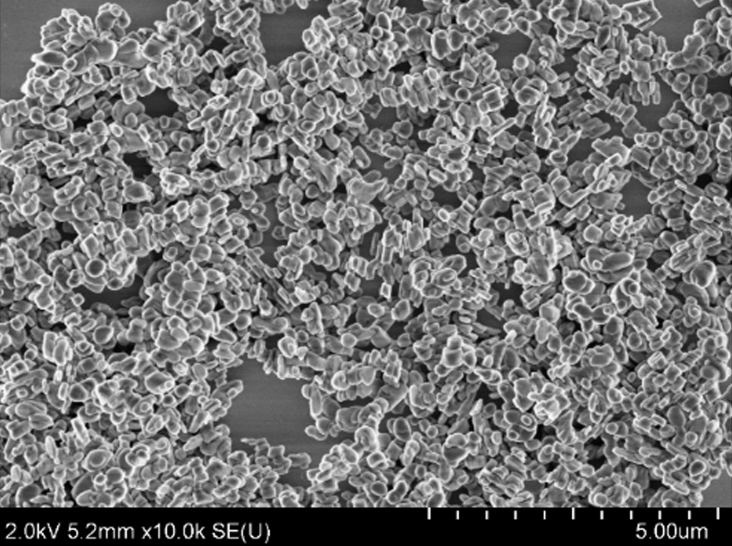
SEM image of hydrotalcite
·Hydrotalcite stone particle size 0.5-0.8 μ m
·Hydrotalcite specific surface area 16.0-18.5 m2/g
·The first weight loss during thermal decomposition is 185-190 ℃
Enhance the transparency of the product
SEM image of hydrotalcite
·Hydrotalcite stone particle size 0.5-0.8 μ m
·Hydrotalcite specific surface area 16.0-18.5 m2/g
·The first weight loss during thermal decomposition is 185-190 ℃
Experimental analysis and comparison
Improve the mechanical strength of the product
Improve the mechanical strength of the product
Experimental analysis and comparison
Improve the mechanical strength of the product
Improve the mechanical strength of the product
Specification
Recommended usage method
Product addition ratio, or suggestions for using it together with other different additives
A&H can effectively improve the transparency and coloring properties of plastics by using it at a temperature of less than 185 ℃ and a dosage of 2-6.5%.
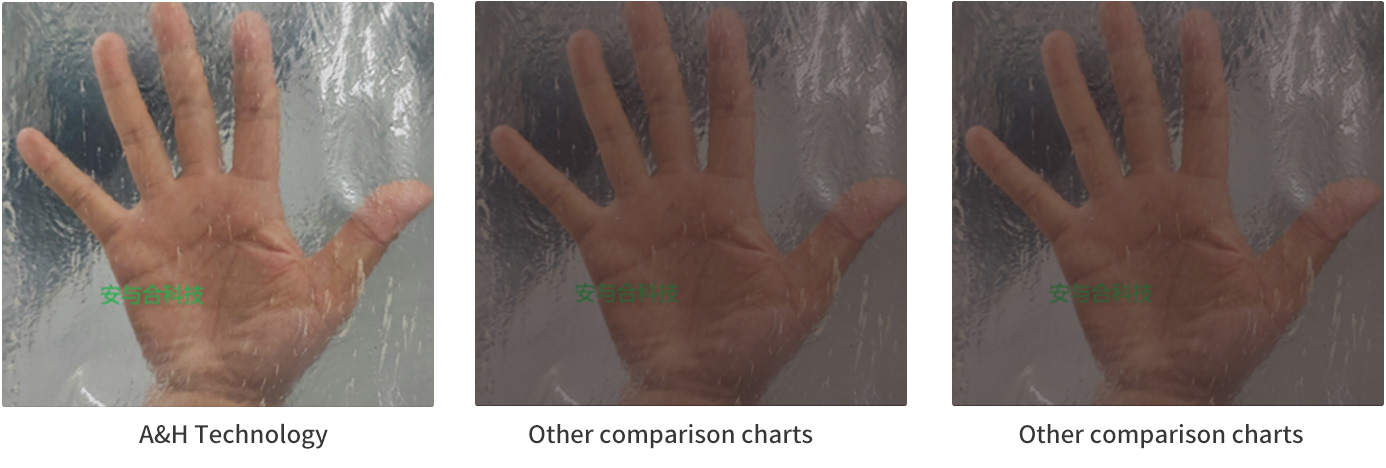
Product addition ratio, or suggestions for using it together with other different additives
A&H can effectively improve the transparency and coloring properties of plastics by using it at a temperature of less than 185 ℃ and a dosage of 2-6.5%.
Third party SGS testing
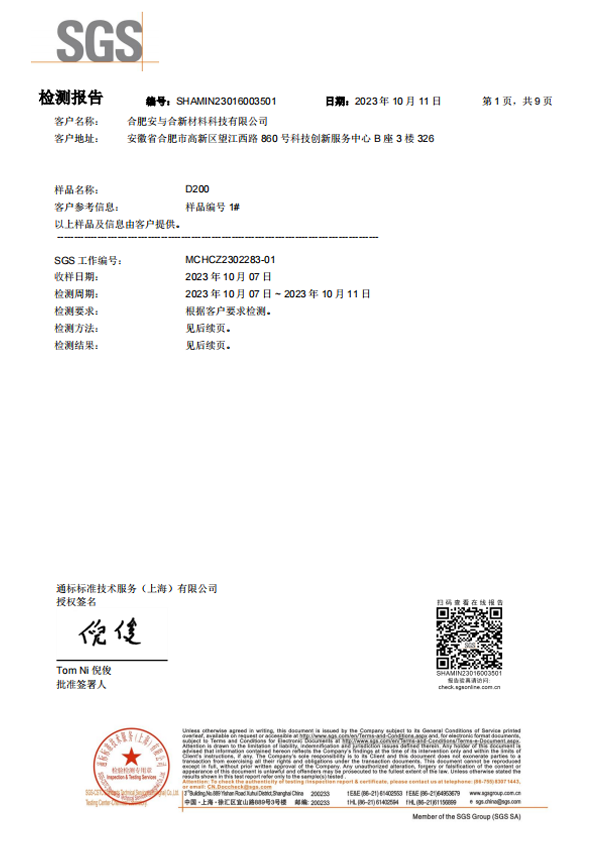
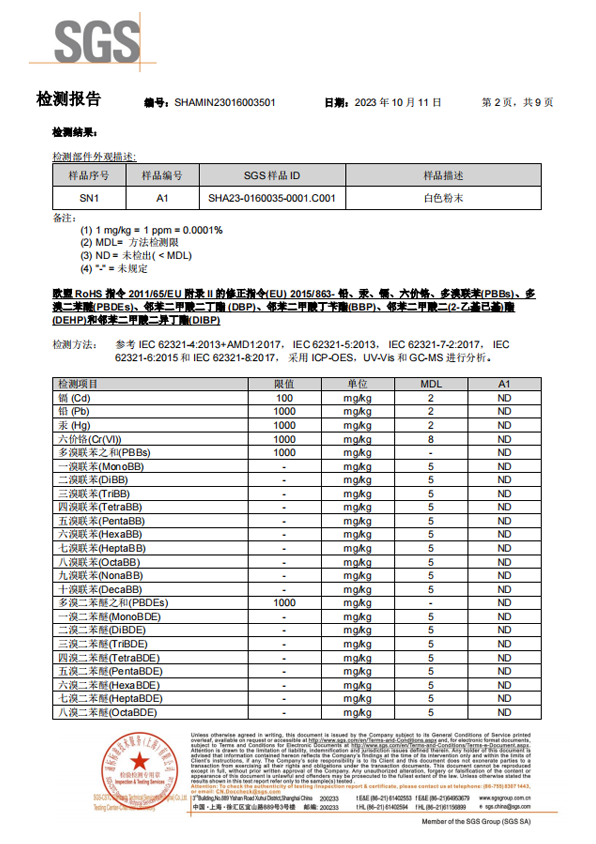
Test conclusion:
The EU RoHS Directive 2011/65/EU did not detect lead, mercury, cadmium, hexavalent chromium, polychlorinated biphenyls (PBBs), polybrominated diphenyl ethers (PBDEs), dibutyl phthalate (DBP), butyl phthalate (BBP), di (2-ethylhexyl) phthalate (DEHP), and diisobutyl phthalate (DIBP).
Test conclusion:
The EU RoHS Directive 2011/65/EU did not detect lead, mercury, cadmium, hexavalent chromium, polychlorinated biphenyls (PBBs), polybrominated diphenyl ethers (PBDEs), dibutyl phthalate (DBP), butyl phthalate (BBP), di (2-ethylhexyl) phthalate (DEHP), and diisobutyl phthalate (DIBP).