










- Hydrotalcite
- Highly transparent hydrotalcite
- Catalyst carrier hydrotalcite
- Flame retardant hydrotalcite
- Stabilizer hydrotalcite
- Agricultural film hydrotalcite
- Nucleating agent hydrotalcite
- Magnesium hydroxide
- Mineral-derived magnesium hydroxide D100
- Synthesized magnesium hydroxide D110
- Electronic grade magnesium hydroxide D120
- Chemical method magnesium hydroxide D5
- Chemical method magnesium hydroxide D6
- Flame retardant
- Rubber specific flame retardant D130
- Efficient flame retardant D320/D320MD
- Efficient flame retardant D320T
- Efficient flame retardant H5VA/D330
- Thermal insulation materials
- Automotive lining
- Automotive insulation materials
- New energy battery insulation film
- Industrial insulation materials
Hydrotalcite
Product Introduction
Hydrotalcite, also known as Layered Double Hydroxides (LDHs), is an important catalyst carrier material. It is composed of layered stacking of metal ions and hydroxide ions, with a typical brucite structure, where metal ions are usually a mixture of divalent and trivalent ions, such as magnesium, aluminum, nickel, cobalt, etc.
Hydrotalcite exhibits excellent performance in the field of catalysis due to its unique layered structure and controllable composition. Its large specific surface area is conducive to adsorbing reactants, and the interlayer anions can be adjusted through ion exchange to meet the needs of different catalytic reactions. In addition, hydrotalcite also has good thermal stability and acid-base stability. When used as a catalyst carrier, it can effectively protect the active components, improve the stability and service life of the catalyst.
Hydrotalcite, also known as Layered Double Hydroxides (LDHs), is an important catalyst carrier material. It is composed of layered stacking of metal ions and hydroxide ions, with a typical brucite structure, where metal ions are usually a mixture of divalent and trivalent ions, such as magnesium, aluminum, nickel, cobalt, etc.
Hydrotalcite exhibits excellent performance in the field of catalysis due to its unique layered structure and controllable composition. Its large specific surface area is conducive to adsorbing reactants, and the interlayer anions can be adjusted through ion exchange to meet the needs of different catalytic reactions. In addition, hydrotalcite also has good thermal stability and acid-base stability. When used as a catalyst carrier, it can effectively protect the active components, improve the stability and service life of the catalyst.
Product characteristics
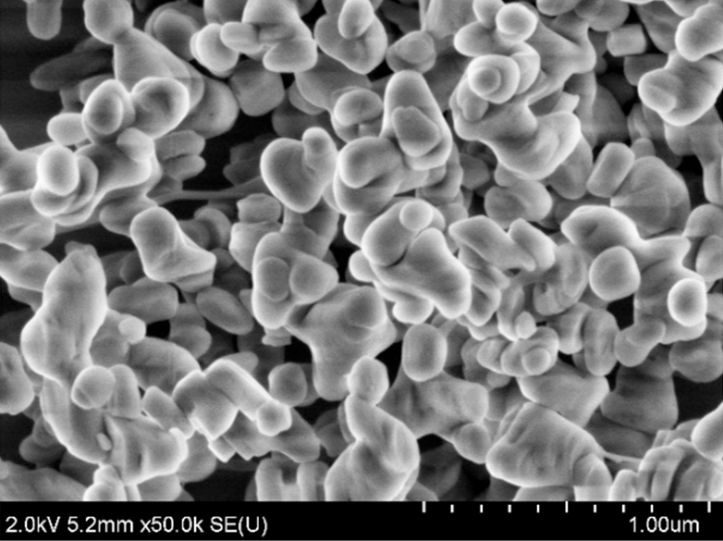
(Scanning Electron Microscope) Image
(Scanning Electron Microscope) Image
Product Introduction
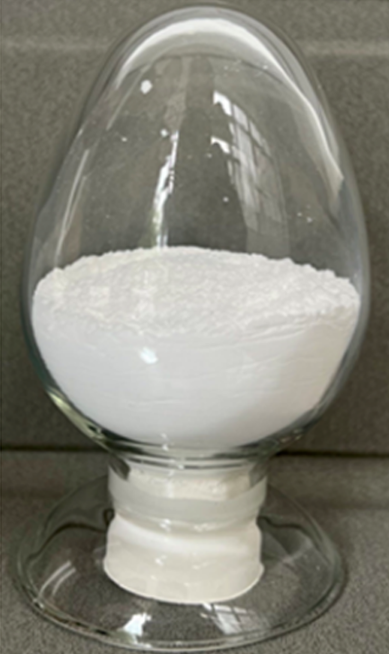
·The purity of hydrotalcite is 99.8-99.8%
·The particle size of hydrotalcite is 0.1-0.4 μ m
·BET surface area is 25-45m ²/g
The EU RoHS Directive 2011/65/EU did not detect lead, mercury, cadmium, hexavalent chromium, polychlorinated biphenyls (PBBs), polybrominated diphenyl ethers (PBDEs), dibutyl phthalate (DBP), butyl phthalate (BBP), di (2-ethylhexyl) phthalate (DEHP), and diisobutyl phthalate (DIBP).
·The purity of hydrotalcite is 99.8-99.8%
·The particle size of hydrotalcite is 0.1-0.4 μ m
·BET surface area is 25-45m ²/g
The EU RoHS Directive 2011/65/EU did not detect lead, mercury, cadmium, hexavalent chromium, polychlorinated biphenyls (PBBs), polybrominated diphenyl ethers (PBDEs), dibutyl phthalate (DBP), butyl phthalate (BBP), di (2-ethylhexyl) phthalate (DEHP), and diisobutyl phthalate (DIBP).
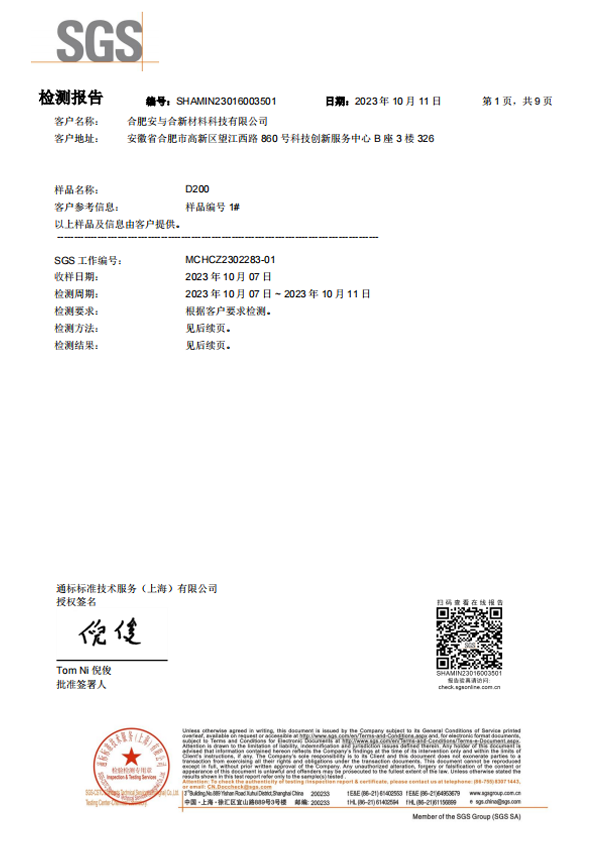
Third party SGS testing
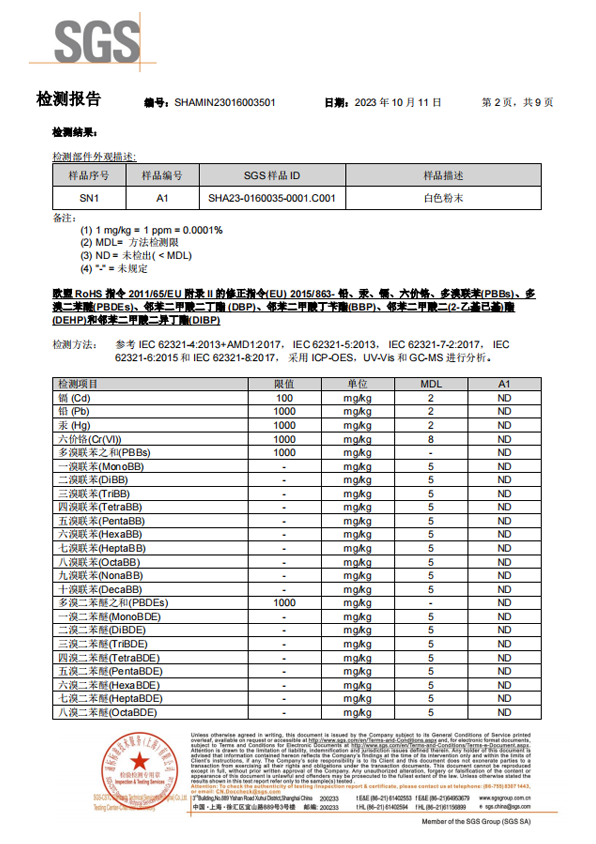
Test conclusion:
The EU RoHS Directive 2011/65/EU did not detect lead, mercury, cadmium, hexavalent chromium, polychlorinated biphenyls (PBBs), polybrominated diphenyl ethers (PBDEs), dibutyl phthalate (DBP), butyl phthalate (BBP), di (2-ethylhexyl) phthalate (DEHP), and diisobutyl phthalate (DIBP).
Test conclusion:
The EU RoHS Directive 2011/65/EU did not detect lead, mercury, cadmium, hexavalent chromium, polychlorinated biphenyls (PBBs), polybrominated diphenyl ethers (PBDEs), dibutyl phthalate (DBP), butyl phthalate (BBP), di (2-ethylhexyl) phthalate (DEHP), and diisobutyl phthalate (DIBP).